Children of Heaven would always be one of my favorite. The story is simple and moving, the kid actors are adorable. And since the fasting month would officially begin tomorrow I'd like to recommend this film to friends who tomorrow will start fasting for the whole month, when the father is picking up groceries, look closely at his bicycle, you will find that the film has happy ending :).
31 July, 2011
22 July, 2011
How Wharton Sketches Her Dissonance in the Age of Innocence

Started this in May, saved and never went back to finish up till yesterday, yes-yes that's how lazy I could be:
Age of Innocence like Wharton's other influential works, set in New York. Specifically, high society of New York where money and bloodlines determine human caste system like any other place of this world. The novel revolves around the lives of Newland Archer, a young lawyer from New York old money family. At the beginning of the story, Archer has just announced his engagement to May Welland. An innocent and fresh looking girl from a family like him, but is a dull mind without ability to think individually. Which is a contrary to her older cousin, Ellen, who is returning to New York after a decade of living in Europe. Countess Olenska she is, Ellen's marriage with Count Olenski (^^) is shattering apart. Archer later learned that Ellen is not happily married, that the Count is a brute man with abusive behavior. Yet divorce is not a choice she could choose because at the time, divorce represents failure and would disgrace not only Ellen, but also her relatives. Because Ellen's divorce would also cost their good name in the eyes of New York society, they have Ellen to be cut from her allowance. Assuming Ellen would then return to Europe and therefore spare her family's good name. Edith Wharton is known for her "society novels". The pretentious life of elite New Yorkers along with complicated connection between love and pain were the theme of Wharton's stories. Charles Trueblood, literature critic, once claimed that aristocracy is the direct subject of Wharton's art. Which on my viewing is unfair because she was also wrote stories such as Ethan Fromme, Mrs. Manstley, Bunner Sisters and Old Maid. On my viewing, tragic ending is more likely to Wharton's style than aristocracy.
In many fictions that Wharton wrote, there would be a character like May. Someone who is completely unable to comprehend depth. To view things beyond artificiality, beyond status. In the Age of Innocence, May Welland is the embodiment of old New York values. As her husband who remained faithful to their marriage despite his feelings for Ellen remembering his wife: "there is no use in trying to emancipate a wife who had not the dimmest notion that she was not free...."
May incapacity to recognize change has made her children and husband conceal their views from her, as Archer conceal his. Until her last moment, May Welland was still as less intelligent and conventional as she were in her youth. So there she died thinking that the world has still hold the same principles and prejudices as old time was.
What struck me the most from the novel was how subtle Wharton could be on expressing her dissonance to Old New York value. If in the story May Welland is the embodiment of old New York, Newland Archer wears what his name suggest: new-land. Someone whose progressive thinking is beyond conception of his community. Symbolism also comes from the irony of love between Newland and the exotic Ellen Olenska. I love how the stern morality in this novel could be read in different ways. The conservatives might read the novel as morally uplifting. Yet they who have more sensibility might also taking into account the satire of the story.
The themes of class and dramatic irony are the primary ingredients of this novel. The way I see it, eighty years after the novel was published human addiction to certain social status remain the same. In the age of Blackberry. In the name of prestige.

12 July, 2011
09 July, 2011
01 July, 2011
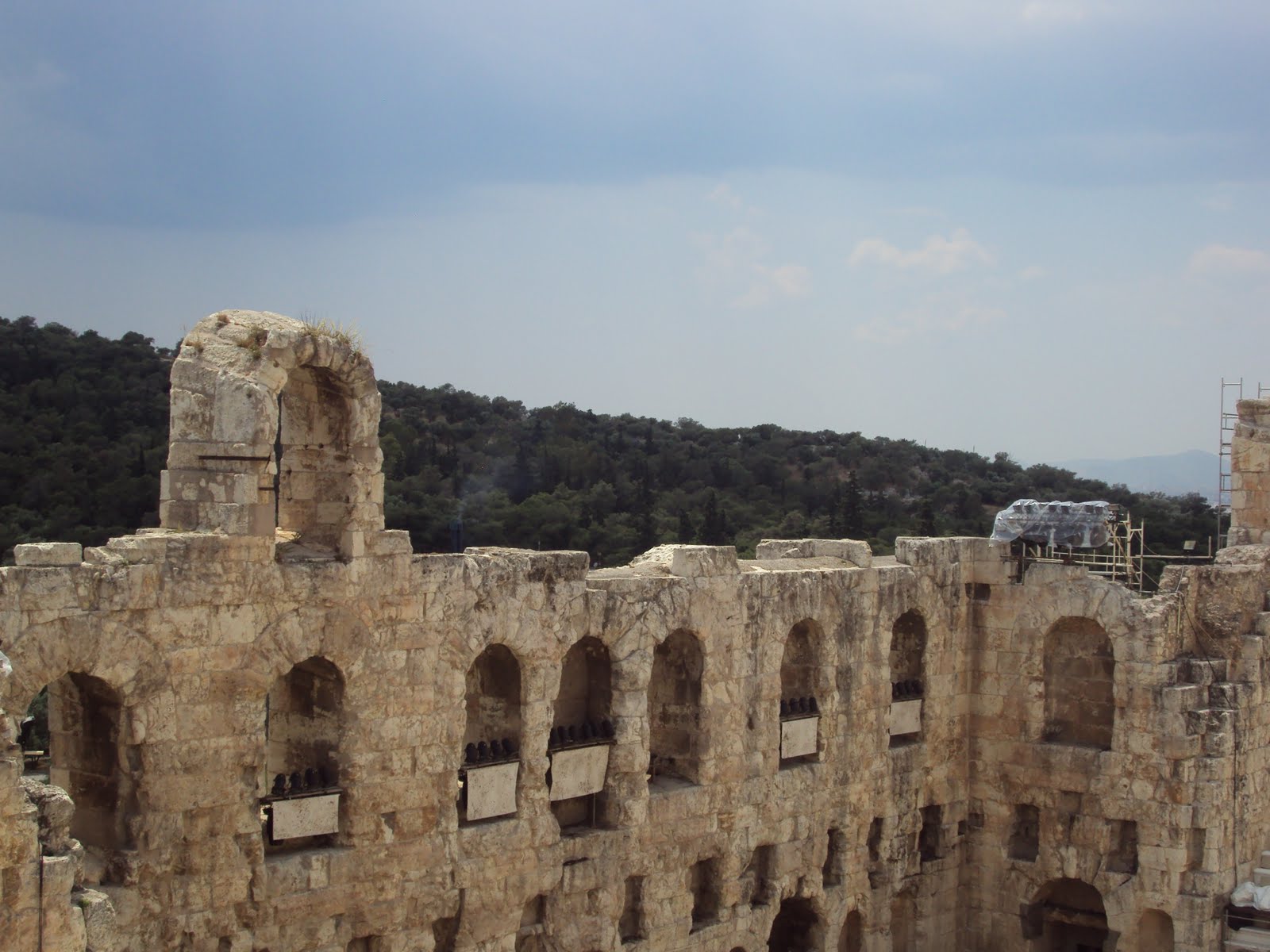
from the land of the gods & goddesses: Greece
 The beautiful ancient Greece with its many islands, rather than writing long sentences on how I have gone bankrupt for this trip (my dream destination since the day I set foot in Europe), I let the photos speak for itself...







18 June, 2011
soon to be the past?
 Oeverpad 482, Meer&Vaart, 1068 PM, Amsterdam, The Netherlands. Tram 17 to Oosdorp area. The nicest house and room I ever lived in Nederland.
21 May, 2011
It's Never Easy to Say "Au Revoir"

Dear C,
It's nice hearing from you. I agree that it has been a while since our last Gmail encounter. My apologize for not immediately reply to your message. It was because at first, I don't know what to say. I have been in your position many times before to know that there won't be any words good enough to comfort you. When I lost my mother, my grandmother, my ex boyfriend, and people tried to console me with their 'wise words', I always ended feeling bitter instead of better.
I was like,'have you been in my position before? Can you relate with what I actually feel? If not, then don't talk like there is rainbow waiting after darkness. You don't even know how it feels.'
Time heals, they say, and you don't believe what they said because as time goes by you miss him more. I'm sorry to be the one who say this to you, it would and could become worst than that. Perhaps at some point you will get use to be without his presence (so time heals after all, if you wait long enough), but there will be moments when your thought wanders and you will remember the good memories of him. And it would kill you -not literally- to let yourself swim in those sentimental feelings.
But death and loss are the natural parts of life itself. To think about it, loss is only ugly to us, the ones that the death has left and won't be able to meet them -our loved ones- anymore. As a thirty something woman (who is fortunate enough looking like twenty :D), I have learned that life itself is so very fragile. Something or someone important to us could be taken away in a matter of flashing seconds. Mistakes can be done and scar will left its eternal mark. Forever there beneath surface to remind us that between breathing and happiness, bad things are waiting in every corner. We are awake every morning to every possibility of misfortunes: betrayal, pain, rejection, hurtful, lies, pretenders, judgments, sickness. The death however, are beyond these earthy sufferings.
As religion convinces us that there is a better afterlife awaiting after our time in this world. We are to believe the ones that have left us were now in a better place.
That's why even though we are different in faith, I am grateful that you are a believer with religion too, C. Because that is the most important part from faith: it gives hope. Hope for a better place after death and that the death will no longer can feel pain and sickness like the rest of us staying in this world sooner or later will.
But I can't tell you what to and what not to feel, C. Feelings are raw. It is something we cannot control upon ourselves. Perhaps it is better to let yourself feel what you feel until you reach the point of ready to let go.
Anytime your thought goes to Kaplan, and you miss him badly, terribly, think of this: at least you have been fortunate enough to have him in your life. To have him armed you with memory and experience you could look back fondly. That instead of remembering him with bitterness, you are blessed to memories him with all the love and good care he once done. That he left you because of his dialysis instead of an ugly break up.
I could not express how sorry I am that you've lost your fiance' within weeks before you were getting married. I was planning to see you in Istanbul on February, but something come up. Somewhere in the near future, I will surely come to visit. Take care.
Subscribe to:
Posts (Atom)